

The Optimisation Trap
Why making life “perfect” can quietly steal your energy, joy, and purpose

I used to think the goal was efficiency. Every morning, every schedule, every weekend was planned to squeeze out the most productivity and least friction. Everything ran smoothly. Everything was planned for the next few years.
And yet, somehow, it still felt… empty. Things started deviating from how I had envisioned.
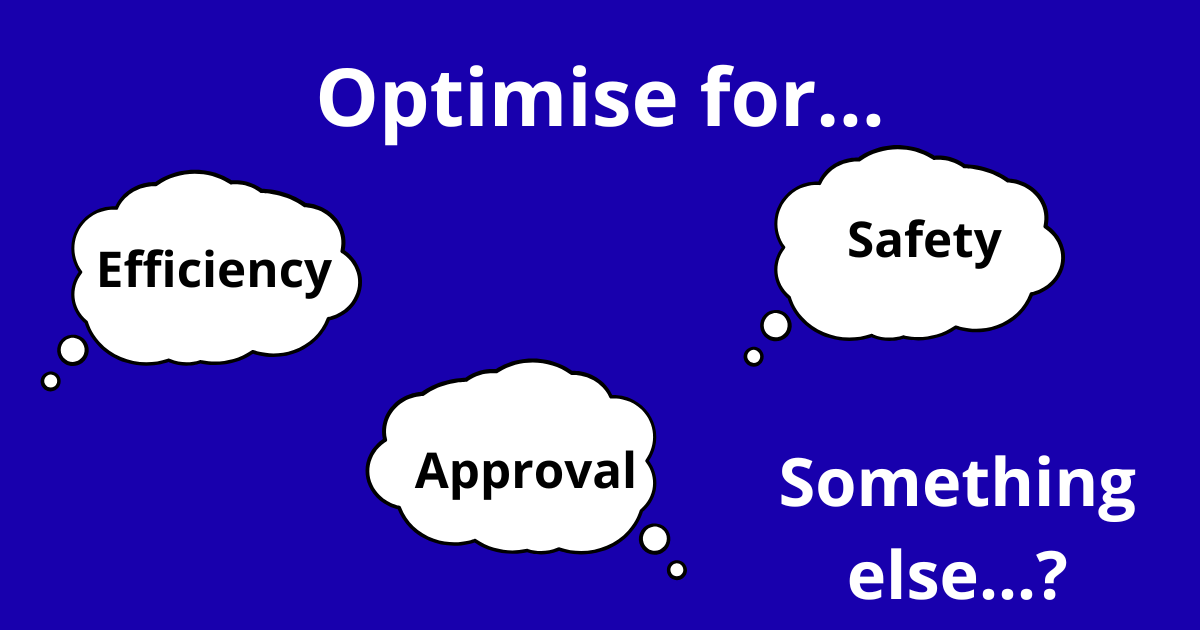
That’s when I realized I had fallen into the optimisation trap.
Most people think optimisation is harmless, or even desirable. After all, who wouldn’t want to be faster, smarter and safer? But not all optimisation is equal. Some forms quietly cost more than they give.
These are four forms of optimisation.
1. Optimising for Efficiency
Efficiency gives us a sense of control, predictability and security. It allows us to perform well while giving less effort.
We all want to be efficient. We want things done on time, milestones and deadlines met. We want our trains, buses and flights to be punctual. We want to spend less effort on mundane, menial tasks.
Growing up in an environment that prioritized efficiency, I learned to trust efficiency. We save time, energy, and mental load. We know what’s coming, and we can get things done without unnecessary friction.
But here’s the subtle trap: when efficiency becomes the goal rather than a tool, life can start to feel… mechanical. Everything runs on time. Everything works. Yet somehow, it can feel hollow.
Despite the predictability and control, clinging on to these ideas can reduce our threshold for the inevitable uncertainties in life. It might make us unknowingly more rigid and take away the spontaneous joy of doing things all in the name of “following the plan” or “following the schedule”.
One example is that I had planned my GPA in university to be above a certain threshold. In the end, it fell below, but I was happy that I decided to deviate from it. I had planned to get a certain grade in one examination, but in the process had compromised my health and had a brain fog and palpitations, and only managed to do part of the paper. At that point, I realized that optimizing for grades might have backfired, and decided in the subsequent semester to take courses I liked instead of forcing the top grades.
The danger isn’t efficiency itself. It’s optimising your life to run perfectly, rather than optimising it for meaning. When efficiency is the measure of success, life becomes something you execute instead of something you live.
2. Optimising for Approval
Approval is the quiet engine behind many of our choices. It’s the nod from a teacher, a manager or a parent. The likes, the praise, the recognition that tells us, “you’re doing it right” or “you’re doing a good job”.
It feels good. Approval gives a sense of belonging, validation, and reassurance. It can open doors, strengthen relationships, and even accelerate opportunities. Who doesn’t want to be respected, admired or recognized for their efforts?
But here’s the catch. Solely doing things for others’ approval might make us bend our choices towards what others want rather than what we really need or our genuine values.
We might say yes when we want to say no. We might pursue projects, milestones or even lifestyles that earn applause, not energy. We might make decisions that others like, but feel like self-betrayal deep down.
When I studied abroad, I held myself back from taking many solo trips due to “advice” from others that it was dangerous, or that I should try to find someone to go with. On group trips, I felt frustrated at the clash in travel styles; some of the people wanted to go to every sight and not rest, while I preferred a more balanced travel style with breaks between activities. I only went on one towards the end of my semester and it was only then that I realized how refreshing it was to travel on my own terms, rather than people with misaligned travel styles. After the semester, I paid the price of taking the “advice” too seriously with regret.
The applause is addictive. It’s easier to trust someone than yourself. It’s more comfortable to stick to the script than risk frowns of disapproval from others. But it can insidiously steer you off your path and silence the voice inside that actually knows what’s right for you.
3. Optimising for Safety
Safety feels good. We all want to avoid harm, discomfort or failure. It’s why we stick to familiar structures, predictable lives and try to “not rock the boat.” Safety gives stability, lowers stress, and helps us feel in control.
But when safety becomes the main compass for decision-making, it quietly narrows our world. Avoiding discomfort or risk can keep us stuck in situations that no longer serve us: whether it’s a job, a relationship or a way of life. Life feels predictable, yes, but flat. Comfortable, but unchallenged.
Taking calculated risks can pay off because it can expose us to different perspectives and views. In university, I was torn between taking courses in my final semester to optimize for good grades and maintaining a stable GPA, but given my limited time left, I decided to take the risk and take courses in theatre and Spanish, two areas that I had close to zero background knowledge of.
In the end, my GPA dropped, but I gladly took that trade-off because the courses I took provided a sense of joy and fulfillment, which meant even more in a very stressful environment. It would have been “safer” to not take them, but the sense of fulfillment and discovering a more interactive learning style that suited me more was fulfilling.
The double-edged sword is clear: safety protects you, but over-reliance can keep you alive but not fully alive. Security without alignment is a cage disguised as comfort.
4. Optimising for Alignment
Alignment is different. It’s not about smooth routines, applause, or comfort. It’s about making choices that resonate with our values, energy, and sense of purpose. Even when they’re messy or uncertain. Even if they take more time. Even if they cause some frowns from others.
Alignment feels alive. It’s the activities that energise you and the people that leave you inspired. It’s the willingness to plan loosely and adjust when life nudges you in unexpected directions.
Unlike the other forms of optimisation, alignment doesn’t promise control, recognition or predictability. But it does promise something more valuable: meaning, satisfaction, and a sense that you’re living your life, not executing it.
The trade-off? Alignment can feel riskier, slower, and less “perfect.” But in the long run, it’s far more rewarding. It’s the compass that ensures your efficiency, your desire for approval, and your need for safety all serve you, not the other way around.
Final Thoughts
The optimisation trap is subtle because it wears the guise of “doing life well.” Efficiency, approval, and safety all feel like progress, but unchecked, they can quietly steal your energy, joy, and sense of purpose.
The antidote is alignment. When you let alignment guide your choices, life becomes less about ticking boxes and more about following your own compass. It’s not always neat or predictable, but it’s real. It’s alive. It’s yours.
Notice where you might be optimising for the wrong things. Pause. Ask: Am I doing this for efficiency, approval, or safety; or am I doing it because it aligns with what I truly care about?
Because in the end, the difference isn’t in doing life perfectly, it’s in doing life that actually matters.